
Data modelling
These are notes on data modelling in Power BI. It is a topic I put at the centre of training because most problems in Power BI environments are not technical problems — they are modelling problems.
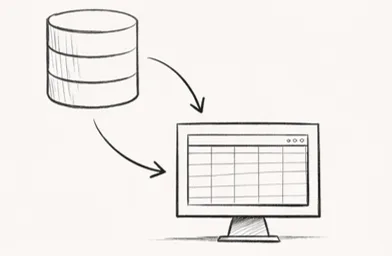
Data modelling is still the core
Every year brings new features in Power BI: Copilot, DirectLake, Fabric, deployment pipelines, code-first models. Yet a recurring theme is that most problems in Power BI environments are not technical problems — they are modelling problems. A poor data model produces slow reports, error-prone calculations and code nobody understands.
The star schema as foundation
A good Power BI data model almost always has the same structure: a fact table in the centre, surrounded by dimension tables. That principle is called a star schema. It sounds simple, and it is simple once you understand why it works that way.
The fact table holds the measurements — revenue, quantities, hours, costs. The dimension tables hold the context: time, product, customer, department. Power BI is built to process this structure efficiently; a correct model is fast, even with large volumes of data.
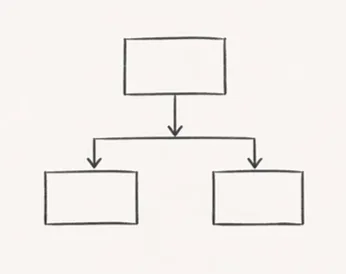
What goes wrong without a good model
Many Power BI problems are caused by a model that is too flat: one large table with everything in it, or source data loaded directly without transformation. That seems convenient — until you need a measure that filters across two dimensions, or until a report takes five minutes to load.
The fundamental issue is not the DAX and not the data gateway — it is the model. Fixing a model after dozens of reports have been built on top of it is expensive and time-consuming. Starting well is always cheaper.
Semantic models and reuse
One development that keeps coming up is the shared semantic model. Instead of every team building its own dataset, the organisation works from one certified model used across the whole business. That demands even more discipline in the model.
When one model is the foundation for dozens of reports from different teams, the structure must be correct, definitions must be unambiguous and naming must be understandable to everyone. A good data model is then no longer just a technical foundation — it is a shared frame of reference for the whole organisation.
Reflection
New tools change a lot, but they do not change what a good data model looks like. The organisations that have come furthest with Power BI and Fabric are also the ones that invested earliest in learning to model properly.
Data modelling is a core part of the Power BI training I provide — from star schemas and semantic models to DAX structure and reuse. Available as a standalone workshop or as part of a longer programme.
More notes are on the notes overview.